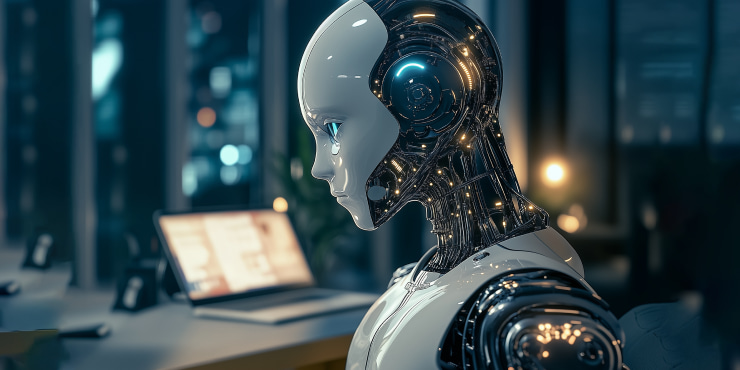
What Is Artificial Intelligence?
Artificial Intelligence, commonly called AI, refers to computer systems that can perform tasks usually done by humans. These tasks include learning, problem-solving, decision-making, and understanding language.
AI is now part of daily life, even if many people do not notice it. From smartphones to online shopping, AI is everywhere.
AI in Smartphones
Modern smartphones use AI in many ways to improve user experience.
Examples include:
- Face recognition
- Voice assistants
- Camera improvements
- Predictive typing
AI helps phones become faster, smarter, and more personalized.
AI in Social Media
Social media platforms heavily depend on AI algorithms.
AI is used for:
- Content recommendations
- Personalized feeds
- Advertisement targeting
- Spam detection
This is why users often see content related to their interests.
AI in Online Shopping
E-commerce websites use AI to improve shopping experiences.
Features include:
- Product recommendations
- Personalized suggestions
- Smart search systems
- Customer support chatbots
AI helps users find products faster and improves online sales.
AI in Education
Education has changed significantly because of AI technology.
AI tools help with:
- Personalized learning
- Smart tutoring systems
- Automated grading
- Language learning assistance
Students can now study more efficiently with AI-powered platforms.
AI in Healthcare
Healthcare is one of the most important fields benefiting from AI.
AI helps doctors with:
- Disease detection
- Medical imaging analysis
- Patient monitoring
- Faster diagnosis support
Technology is helping improve medical accuracy and efficiency.
AI in Transportation
Transportation systems are becoming smarter because of AI.
Examples:
- GPS navigation systems
- Traffic prediction
- Self-driving vehicle development
- Ride-sharing apps
AI helps reduce travel time and improve road safety.
AI in Entertainment
Entertainment platforms use AI to personalize content.
Examples:
- Movie recommendations
- Music suggestions
- Video streaming algorithms
AI analyzes user behavior to recommend content people may enjoy.
AI Voice Assistants
Voice assistants are now common in homes and smartphones.
Popular uses:
- Setting reminders
- Playing music
- Answering questions
- Smart home control
These assistants make daily tasks more convenient.
AI in Smart Homes
Smart homes use AI to automate daily activities.
Examples:
- Smart lighting
- Temperature control
- Security systems
- Smart appliances
AI improves convenience, energy efficiency, and home security.
AI in Banking and Finance
Banks and financial services use AI for security and customer support.
AI applications include:
- Fraud detection
- Chatbots
- Spending analysis
- Online banking automation
This improves speed and safety in financial systems.
AI in Workplace Productivity
Many workplaces now use AI tools to improve productivity.
Benefits:
- Task automation
- Faster communication
- Data analysis
- Time management assistance
AI helps employees work more efficiently.
Benefits of AI in Daily Life
AI offers many advantages for modern society.
Major benefits:
- Saves time
- Improves convenience
- Reduces repetitive work
- Enhances efficiency
- Supports decision-making
Technology is simplifying many everyday activities.
Concerns About AI
Despite its benefits, AI also raises concerns.
Common concerns:
- Privacy issues
- Job replacement fears
- Overdependence on technology
- Data security risks
Responsible AI development is important for the future.
AI and Human Creativity
AI can support creativity but cannot fully replace human imagination.
AI helps with:
- Content ideas
- Design assistance
- Music and video editing
However, human creativity and emotions remain unique.
Future of Artificial Intelligence
AI technology is expected to become even more advanced.
Future possibilities:
- Smarter virtual assistants
- Advanced healthcare systems
- Better automation
- Personalized digital experiences
AI will likely become a bigger part of daily life in the coming years.
Common Misunderstandings About AI
Many people misunderstand AI technology.
Common myths:
- AI can fully replace humans
- AI always gives correct answers
- AI works without human input
In reality, AI still depends heavily on human programming and supervision.
Conclusion
Artificial Intelligence is changing everyday life in many powerful ways. From education and healthcare to shopping and entertainment, AI is making daily activities faster and more convenient.
Although there are challenges and concerns, AI continues to improve modern life when used responsibly.
The future of AI will likely bring even more innovation, making technology an even stronger part of human society.